Hoe Ontwikkelaars Ticketwederverkopers Verslaan met Python
Heb je ooit geprobeerd concertkaartjes te kopen voor een populaire band in de eerste minuten van de verkoop? Meestal gaat het zo: je ververst de pagina om 10:00:00, en om 10:00:01 zijn de kaartjes al weg. In China is dit probleem nog acuter, daarom werden projecten zoals damaihelper daar geboren. Het is een geautomatiseerd systeem voor het kopen van kaartjes op platforms zoals Damai, Taopiaopiao en Binwandao.
Interessant is dat het project evolueerde van een snelle-en-vies script naar een volwaardige applicatie met een webinterface en rudimentaire AI. Ik struinde het toevallig tegen het lijf en besloot uit te zoeken hoe de moderne "wapenwedloop" in de ticketmarkt werkt.
Waarom Moeilijk Doen Als Er Officiële Apps Zijn
Het belangrijkste probleem met grote platforms zijn wederverkopers met hun bot-farms. Een gewone persoon kan fysiek niet concurreren met de snelheid van een script. Damaihelper is een poging om het speelveld gelijk te trekken voor degenen die begrijpen hoe Python en Selenium werken.
Het project automatiseert de hele cyclus: van authenticatie en het selecteren van het gewenste gedeelte tot het oplossen van captchas en het plaatsen van een bestelling. De auteur beweert dat de nieuwste versie met ingebouwde "agents" de slagingskans bijna verdubbelt. Natuurlijk zijn dit marketngcijfers uit de README, maar de technische basis erachter is solide.
Wat Deze Krachtpatser Kan Doen
Ontwikkelaar Guyungy heeft een behoorlijk diverse tech-zoo onder de motorkap gestopt. Hier is wat mijn aandacht trok:
- Cross-platform ondersteuning. Het script is niet gebonden aan één platform. Het kan werken met de grote Chinese ticket-aggregatoren. En de architectuur is modulair, dus een nieuw platform toevoegen is slechts een kwestie van één plugin schrijven.
- Omzeilen van beveiliging. In plaats van standaard Selenium gebruikt de auteur gemodificeerde automatisering stealth-methoden. Dit helpt om anti-fraudesystemen te misleiden die verdachte activiteit detecteren in een gewone browser die wordt bestuurd door WebDriver.
- Beeldverwerking. De Pillow en pytesseract bibliotheken zijn hier niet voor niets. Ze zijn nodig voor het herkennen van eenvoudige captchas. Voor complexere gevallen vermelden de nieuwste updates het gebruik van AI-algoritmen.
- Gemakkelijk opstarten. Als je vroeger met de console moest rommelen, is er nu een GUI in Python en zelfs een webpaneel. Je kunt een server lokaal draaien en het proces beheren via een browser.
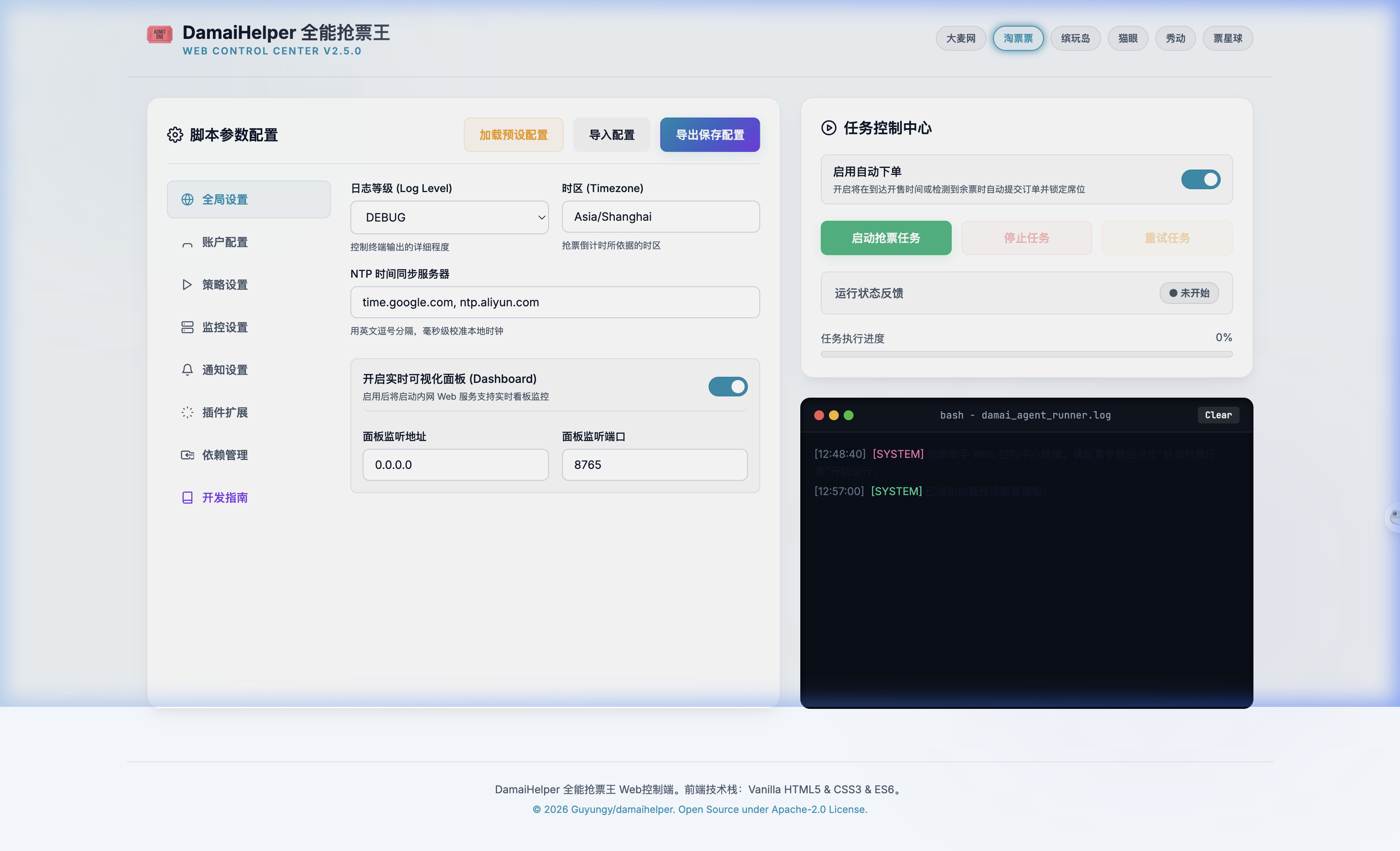
Technische Stack en Architectuur
Het project is voornamelijk geschreven in Python. Selenium versie 4.x wordt gebruikt voor browser-automatisering. Om het script exact op het moment van de kaartverkoop te starten, wordt APScheduler gebruikt.
De tijdmanagement is interessant georganiseerd. De configuraties bevatten NTP-tijdsynchronisatie-instellingen. In de strijd om kaartjes telt elke milliseconde, en als de systeemklok van je computer ook maar een halve seconde achterloopt op de server van het platform, heb je verloren.
De mapstructuur ziet er logisch uit:
ticket_script.py— hier leeft de kernlogica voor interactie met sites.GUI.py— de interface voor degenen die de terminal niet leuk vinden.config/— de instellingenmap waar accountgegevens en zitplaatsvoorkeuren worden opgeslagen.logs/— een cruciaal belangrijk ding voor debugging wanneer er iets misgaat tijdens een kaartuitgifte.
Hoe Het In De Praktijk Werkt
Om dit ding te draaien heb je Python 3.8+ en Google Chrome geïnstalleerd nodig. Het proces is standaard: kloon de repository, installeer afhankelijkheden via pip.
Om het hoofdscenario te draaien, gebruik je het commando python ticket_script.py. En als je een mooie interface wilt — python GUI.py.
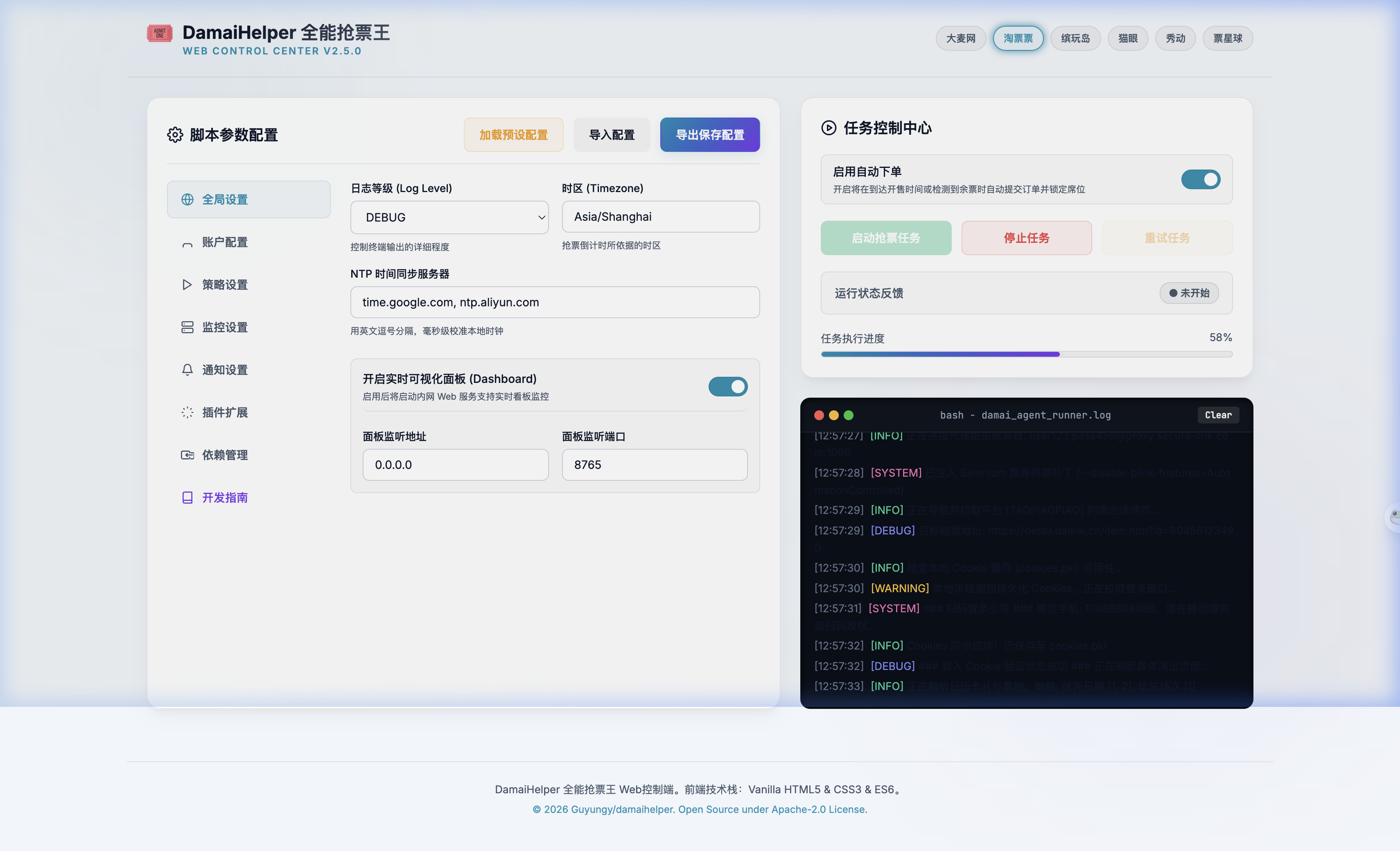
Binnen de webinterface kun je alles configureren: van het aantal kaartjes tot specifieke kijkersnamen (in China zijn aankopen vaak gekoppeld aan ID-kaarten). Er is zelfs een optie om proxyservers te gebruiken om IP-bans te voorkomen als je besluit het script in tien threads te draaien.
Is Het De Moeite Waard Om Te Proberen
Ik zal eerlijk zijn: het project is niche en afgestemd op de Chinese markt. Als je droomt van een concert in Beijing — dit is je beste vriend. Maar zelfs als dat niet zo is, is damaihelper interessant als tutorial voor het bouwen van complexe bots met Selenium.
Logging is hier goed geïmplementeerd, en er zijn voorbeelden van hoe om te gaan met dynamische pagina-elementen en hoe je een complex script kunt verpakken in een gebruiksvriendelijke shell voor reguliere gebruikers.
Het enige nadeel is dat de documentatie in het Chinees is. Maar de code is transparant genoeg, en moderne vertalers verwerken de comments gemakkelijk. Anders is het een geweldig voorbeeld van hoe enthousiastelingen een alledaags probleem oplossen met code.
Het belangrijkste om te onthouden is de ethische kant — dergelijke tools zijn bedoeld voor persoonlijk gebruik. Ze gebruiken voor industriële ticket-doorverkoop is niet alleen twijfelachtig vanuit moreel oogpunt, maar kan ook leiden tot accountbans. Uiteindelijk is het gewoon technologie, en hoe je het gebruikt is aan jou.
Gerelateerde projecten